PORTLAND CITY AUDITOR is an office built with conflict in mind.
As the only elected city office aside from members of city council, the auditor oversees deep dives into Portland’s inner workings, regularly emerging with biting conclusions. Its ombudsman’s office investigates complaints about city officials, demanding records from other city agencies. Its Independent Police Review (IPR) pokes into allegations of police misconduct.
Given all this, it’s been odd lately to see the bulk of controversy emanating from the office not focused on Auditor Mary Hull Caballero’s findings of waste or lax oversight, but from Hull Caballero chafing at a lack of independence and authority.
Repeatedly in the last year, Hull Caballero has said she’s run up against limitations in her ability to do her job. She’s hoping you’ll change that.
The auditor’s quietly airing a still-vague set of changes [PDF] she’d like voters to make to the city charter—tweaks she says will enshrine a better reflection of her office in Portland’s pre-eminent governing document, and give her the breathing room she needs.
“It makes sense why it evolved the way it did,” Hull Caballero says, “but it doesn’t work anymore.”
You don’t have to look too hard to find evidence of Hull Caballero’s disaffection. During city budget deliberations earlier this year, she railed against cuts to her office that Mayor Charlie Hales had considered, and even threatened to jettison a portion of the duties her employees carry out.
And last year, when her office was investigating whether Hales and Commissioner Steve Novick had broken disclosure rules by not reporting a meeting with an Uber representative, Hull Caballero was troubled by the fact that the city attorney’s office was advising her staff as well as Hales and Novick.
“I did not feel that my office was being served well by that arrangement,” Hull Caballero says.
A similar issue cropped up recently, when Hull Caballero was seeking legal advice on whether Commissioner Amanda Fritz would be violating the city charter by forcing Hull Caballero to administer a new publicly funded elections system. The auditor says the deputy city attorney tapped to give her advice was the same one helping Fritz craft her proposal.
So Hull Caballero is proposing four changes to the portion of the charter that lays out her responsibilities. She wants the ombudsman’s office and IPR, which have been housed with the auditor since their creation in 2001, to be formally listed among her duties. She wants freedom from constraints that the city’s Office of Management and Finance puts on other bureaus, arguing it’s not proper that an office she audits has power to regulate her decisions. She’d like “independent budgeting” to ensure her funds won’t be unduly slashed (this would likely involve a mechanism that increases her budget as city revenues rise, and decreases it when they fall). And she wants the ability to hire outside attorneys whenever conflicts arise.
Hull Caballero understands this might sound like a lot of freedom. She insists the auditor’s office will contract regularly with outside consultants to ensure it’s held accountable.
Still, don’t be surprised to see officials throw up red flags. City Attorney Tracy Reeve is said to be dubious of the proposal (though she wouldn’t go into detail with me, citing attorney-client privilege), and Hull Caballero says Commissioner Amanda Fritz has voiced concern.
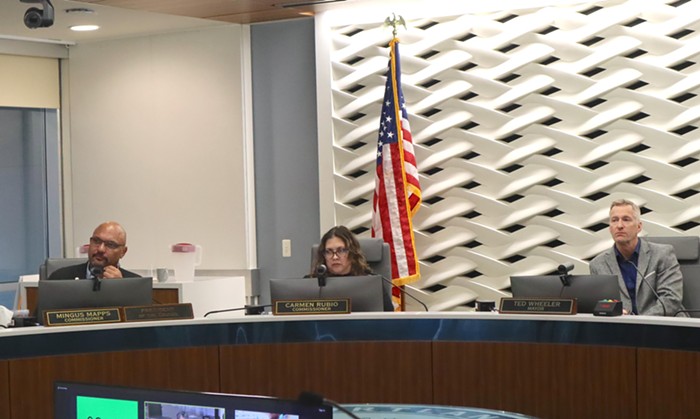
Not briefed: Hales, perhaps the auditor’s most constant sparring partner in recent years. Hull Caballero pointedly scheduled the first hearing on her proposal for January 10, when Hales will be gone and Mayor-elect Ted Wheeler is in office.
She’s hoping the next council will push her proposal to voters in a May 2017 election, and, frankly, she doesn’t see any reason why it wouldn’t.
“The question we’re asking is, ‘Will you refer this to the voters?’” she says. “It’s a weird thing for them to say, ‘No we won’t.’”